
Scytec DataXchange Pricing and Benefits

Affordable Machine Monitoring for CNCs, Fabrication, Cobots… Everything in Your Shop Floor
Scytec DataXchange pricing is designed to fit the needs of your specific manufacturing environment, based on factors like the number of machines you want to monitor, the types of equipment on your shop floor, and the level of visibility and reporting you require. This flexible approach ensures you only pay for what you need while still getting a solution that can scale as your operation grows.
Scytec DataXchange machine data collection and machine monitoring system provides different license levels that allow flexibility and scalability for all sizes of manufacturing organizations. The different license levels determine what type of data can be collected, and a combination of the license levels can be used allowing some equipment to only collect cycle status while other equipment also collects downtime, part or OEE-related detail.
With the different Scytec DataXchange license levels, you can track whether your equipment is running or not running as well as utilization and overrides. DataXchange users can also receive email/text alerts and track part numbers, program numbers, good and scrap part counts, OEE, and more. A supplemental application called the Operator Data Interface (ODI) made for logging planned and unplanned downtime is available as well.
This short video gives viewers a brief rundown of what Scytec DataXchange machine monitoring does and the benefits DataXchange provides.
Reach Out For More

Deployment Offerings to Fit Your Security Needs
Commercial Cloud is our most popular Scytec DataXchange deployment option. It is also the easiest way to get connected and start monitoring your machines. The Commercial Cloud offering, provides quick and easy implementation, low overhead cost, and you don’t have to worry about providing your own web or database server. Scytec DataXchange pricing on the Commercial Cloud is simple and transparent.
Scytec offers an On-Premise solution to keep all stored data inside your corporate network. The implementation process is the same as the Scytec DataXchange Commercial Cloud offering, however hosting will be held on your own web and database server. Nothing leaves your facility.
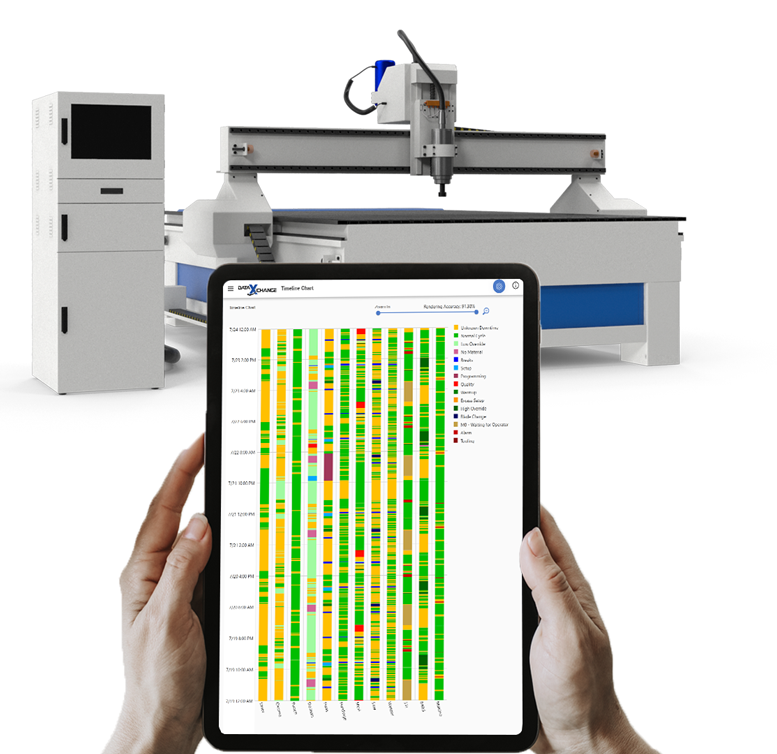
Scytec DataXchange is a powerful yet affordable machine monitoring solution that gives manufacturers real-time visibility into shop floor performance, including OEE, downtime, and machine utilization. DataXchange connects to a wide range of equipment, including modern CNC, fabrication, manual, legacy machines, and delivers actionable insights to drive productivity.
With flexible deployment options, no long-term contracts, and pricing that often pays for itself with just one hour of downtime saved per machine, DataXchange makes smart manufacturing accessible to shops of any size.
DataXchange is scalable, and easy to implement, and no long-term commitments. Whatever you’re monitoring on your shop floor, DataXchange helps you make smarter decisions, reduce downtime, and boost productivity, all without breaking the budget.
The More You Monitor, the More You Save
With Scytec DataXchange machine monitoring, manufacturers have the ability to scale with their manufacturing OEE reporting solution with ease as DataXchange offers volume discounts. The more machines you are monitoring on your DataXchange plan, the more you save, as Scytec offers deductions with the amount you are monitoring. Reach out for a demonstration and see how much you could be saving compared to other machine monitoring alternatives with DataXchange.
Feature Levels That Deliver What Your Shop Floor Requires
Scytec DataXchange machine monitoring has different license levels meant for long term growth with your OEE reporting. Your visual factory can start off simple with reporting cycle times, or you can have everything and more you want reported on some of the higher DataXchange licensing levels. Reach out for more information on what DataXchange machine monitoring licensing level will work for you.
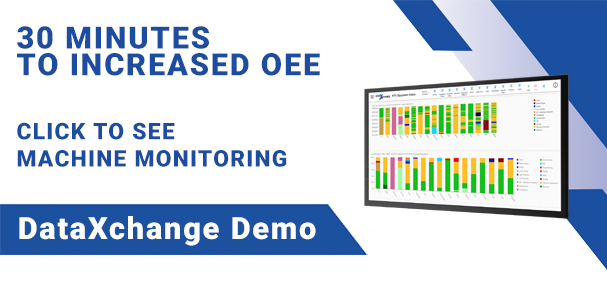
Demo in 30 minutes. Be improving your shop floor in a matter of hours!

How Does DataXchange Solve Common Manufacturing Issues?
Watch this video for more info!
What Can Manufacturers Do with the Savings from Smart Factory Technology?
Discover how manufacturers can reinvest savings generated by Scytec DataXchange machine monitoring to boost productivity, fund innovation, expand markets, and strengthen Industry 4.0 initiatives.
Unlocking the Financial Benefits of Machine Monitoring
In today’s fast-moving world of Industry 4.0, staying competitive requires more than just efficient production; it requires insight, automation, and smart data. Platforms like Scytec DataXchange help manufacturers transform operations by providing real-time visibility into equipment performance and production efficiency.
The result? Increased machine utilization, reduced downtime, and measurable OEE (Overall Equipment Effectiveness) gains, often leading to 10–30% improvements in productivity. But once these efficiencies turn into tangible cost savings, an important question arises: what should manufacturers do with the extra capital created by smart factory technology?
Reinvest in Development and Infrastructure
Innovation drives competitiveness. The savings uncovered by machine monitoring software can be strategically redirected into R&D to fund new product development, process improvement, and prototype creation.
Scytec DataXchange identifies machine inactivity and inefficiency trends, helping manufacturers recover lost production time. The resulting boost in output can fuel further research and development, allowing teams to innovate without sacrificing capacity. Additionally, these savings can fund critical infrastructure upgrades, from new machinery and automation systems to energy-efficient production lines. A modernized facility not only improves quality and throughput but also aligns with lean manufacturing and continuous improvement principles that DataXchange supports.
Expand Market Reach and Diversify Revenue Streams
The financial gains from smart factory implementation can also fuel growth and market expansion. With increased profitability, manufacturers can:
- Explore new geographical markets
- Diversify product lines
- Invest in marketing and digital outreach
- Establish new distribution channels
- Pursue strategic mergers or acquisitions
By using DataXchange-driven savings to strengthen financial stability, manufacturers can take calculated risks to expand their footprint both domestically and globally, ensuring long-term sustainability and competitive differentiation.
Improve Quoting Accuracy and Delivery Times
Before the rise of IIoT platforms like Scytec DataXchange, most production tracking relied on paper logs and manual estimates. This made it difficult to accurately measure performance, scrap rates, or true part output.
With DataXchange, manufacturers gain real-time insight into parts produced, cycle times, and operator performance, critical data that informs lean improvement initiatives and performance metrics.
Once bottlenecks are identified and addressed, throughput increases. The result?
- More parts produced per shift
- Faster delivery times to customers
- Improved quoting accuracy based on real data
These improvements directly translate into higher customer satisfaction and stronger repeat business, a cornerstone of sustained profitability.
Foster a Culture of Innovation and Continuous Improvement
Smart factory savings shouldn’t only go into equipment; they should also empower people. Investing in employee training and development ensures teams can fully leverage digital tools and adapt to new manufacturing technologies.
Funds can be allocated to:
- Skill development programs and certification courses
- Cross-training operators and maintenance staff
- Supporting higher education or technical workshops
Manufacturers can also invest in collaboration and innovation initiatives, such as joint R&D projects, consortia, or partnerships with research institutions, to develop next-generation manufacturing technologies.
Drive Sustainability and Smart Resource Management
Many modern manufacturers are channeling savings into sustainability initiatives, such as:
- Implementing energy-efficient equipment
- Reducing waste and scrap through process visibility
- Investing in predictive maintenance to extend machine life
These initiatives not only align with environmental goals but also reinforce the company’s reputation with eco-conscious customers and partners. The savings generated through machine monitoring platforms like Scytec DataXchange are more than just a boost to the bottom line, they’re a launchpad for transformation.
By strategically reinvesting those funds into R&D, infrastructure, employee development, market expansion, and sustainability, manufacturers can strengthen their operations, stay agile, and build a resilient foundation for the future. In a competitive global market, data-driven decision-making and continuous improvement are no longer optional; they’re the key to long-term success.
Manufacturing Problems Solved with DataXchange Machine Monitoring Webinar
Changeovers, long machine setup times, and a lack of historical and real-time data from shop floor equipment are common issues that manufacturers encounter. In this informative Scytec DataXchange machine monitoring webinar, we discuss how these challenges in manufacturing are addressed with smart factory technology.

How to Get Started with Smart Factory Technology: A Practical Guide for Manufacturers
For many manufacturers, the move toward a smart factory begins with a single question: Where do we start? While the concept of digital transformation can feel overwhelming, the first steps toward implementing machine monitoring and smart factory technology don’t have to be complicated. With the right strategy, you can quickly uncover opportunities to improve efficiency, reduce downtime, and gain real-time visibility across your shop floor.
This guide walks through what manufacturers should focus on when beginning their smart factory journey, and how machine monitoring platforms like Scytec DataXchange can accelerate the path to measurable results.
How to Define Your Operational Goals and Pain Points in CNC Manufacturing With Machine Monitoring
Before connecting equipment or evaluating software, start with clarity. Identify the biggest challenges on your shop floor today. Common areas include unplanned downtime, lack of visibility, inefficient manual reporting, or uncertainty about true machine utilization. By outlining your objectives early, you can align your smart factory efforts to target improvements that matter most to your business.
Ask questions such as:
- Where do we lose the most time during production?
- What CNC production data do we wish we had but don’t?
- Which machines or processes would benefit most from real-time monitoring and transparency?
This upfront assessment ensures your machine monitoring initiative is purposeful and measurable.
Evaluate Your Existing Equipment and Connectivity Options
Every smart factory rollout depends on understanding your current machine mix. Newer CNC machines often have built-in data interfaces, while older equipment may require adapters or hardware add-ons. Platforms like DataXchange support a wide range of machine types, making it easier to connect both legacy and modern assets.
Map your machines by:
- Control type and model
- Available data outputs (MTConnect, FANUC FOCAS, OPC UA, etc.)
- Network accessibility
- Production priority
Start Small with a Pilot Implementation
A focused pilot is the fastest way to prove value. Select a small group of machines, typically 3 to 10, that represent various processes or problem areas. Running a pilot allows your team to:
- Validate data accuracy
- Test dashboards and reports
- Identify workflow improvements
- Develop internal best practices
Most manufacturers see significant insights within days of activating machine monitoring, making the pilot phase a powerful momentum builder.
Create Visibility with Dashboards and Reporting
Once machines are connected, real-time dashboards and automated reporting quickly transform how your team works. Production managers can track utilization, downtime reasons, and cycle times as they happen. Operators no longer need manual logs, and leadership gains a reliable foundation for performance improvement and continuous improvement initiatives.
Leveraging platforms like DataXchange allows you to tailor dashboards to specific roles, ensuring everyone sees the information they need, when they need it.
Standardize Processes and Scale Across Your Shop
With data flowing and improvements documented, you can roll out machine monitoring across additional work centers. Establish standardized operating procedures for how data is used, how downtime is categorized, and how teams respond to insights. Scaling becomes streamlined once your processes are repeatable and proven.